Clinical Leadership in Nursing: How Sarah McAuliff Shapes the Next Generation of Nurse Leaders
Written by:
University of Tulsa
• Mar 31, 2026
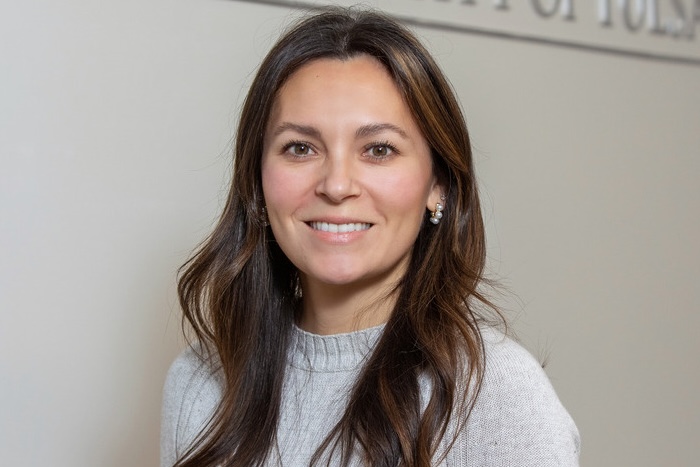
Sarah McAuliff, DNP, APRN-CNP, FNP-BC, began her path into nursing with a deeply personal influence. Reflecting on her early motivation, she shares, “My grandmother was a nurse, and watching her care for others had a lasting impact on me. That inspiration ultimately led me to pursue nursing as a career.” That early calling shaped a career grounded in service, leadership, and education.
Today, Dr. McAuliff is the director of the Family Nurse Practitioner, Doctor of Nursing Practice (FNP, DNP) program at The University of Tulsa. Read on to learn more about her professional journey and how she helps prepare her students for clinical leadership in nursing.
From Bedside to Leadership
After earning her Bachelor of Science in Nursing (BSN) from The University of Oklahoma–Tulsa, Dr. McAuliff started working in the cardiovascular intensive care unit (CVICU), where she spent two years caring for high-acuity patients.
During her undergraduate education, Dr. McAuliff explored multiple areas of medicine through a research internship. This experience clarified her professional focus. As she explains, “I realized I was drawn to family medicine and primary care — the opportunity to care for patients across the lifespan, build long-term relationships, and address both medical and social factors influencing health.”
She went on to complete her Master of Science in Nursing (MSN) as a family nurse practitioner at the University of Cincinnati, and later earned her DNP at The University of Tulsa.
Choosing the DNP Path
The decision to pursue a DNP was intentional and purposeful: “At the time, I knew I wanted to keep the door open for teaching and leadership opportunities in the future, and the DNP allowed me to do that while continuing to grow clinically.”
One key differentiator between a master’s degree in nursing and a doctorate is the opportunity for applied research at the doctorate level: “When you do your [master’s] thesis, you propose an idea, but you don’t follow through with implementing.” In a DNP, students focus more on real-world applications of these theories.
Dr. McAuliff also sees the DNP as increasingly important in the evolving health care landscape — particularly in Oklahoma: “I do feel like there is a preference for DNPs where there wasn’t before. But now, especially with our legislature just passing that bill where we have independent practice in Oklahoma, it’s going to be really important for those independent nurse practitioners to say, ‘I have a terminal degree.’"
Discovering a Passion for Teaching and Academic Leadership
Dr. McAuliff’s decision to earn her DNP led to an unexpected yet fulfilling turn toward academia. Although earning a terminal degree had long been part of her vision, the timing mattered.
“Earning my terminal degree was always a long-term goal; it was really about timing and balancing family and professional responsibilities. During a particularly challenging period in my clinical role, I decided it was time to move forward and pursue my DNP, so I would have additional career options in the future,” she explains.
While still a DNP student, she took a temporary teaching position in the FNP, DNP program. What began as a short-term opportunity quickly became a calling. As she recalls, “I accepted the role without any specific expectations, but quickly discovered that I truly loved teaching, mentoring students, and working within the academic environment at TU.” She’s remained with the program ever since.
Today, she credits the DNP with making that balance between clinical leadership and nursing education possible: “The DNP has allowed me to blend clinical practice, education, and leadership in a way that feels both meaningful and impactful.”
A Teaching Philosophy Rooted in Evidence-Based Care
In her role, Dr. McAuliff has a clear philosophy regarding both practice and teaching: “I bring a strong commitment to patient-centered, holistic care, treating patients as whole individuals rather than isolated diagnoses.”
Evidence-based practice is central to her approach: “Evidence-based practice is foundational to both my clinical work and my teaching philosophy, and I emphasize helping students understand not just what we do in practice, but why we do it.”
Just as important is the learning environment itself: “I’m also passionate about fostering an academic environment that is supportive, inclusive, and collaborative.”
What Distinguishes DNP-Prepared Nurses
As director of the FNP, DNP program, Dr. McAuliff finds deep satisfaction in watching students evolve professionally: “One of the most rewarding aspects of my role is watching students grow into confident, competent clinicians.”
She describes the moment when learning truly clicks: “It’s incredibly fulfilling to see them begin to integrate advanced assessment skills, diagnostic reasoning, evidence-based management, and patient education into cohesive, high-quality care.” Ultimately, “Watching students put all the pieces together and truly step into the advanced practice role is one of the highlights of this position.”
Dr. McAuliff is also clear about what distinguishes DNP-prepared nurses in today’s health care landscape: “Clinically, DNP-prepared nurses learn the same foundational concepts related to diagnosis and management of patient care as other advanced practice registered nurses.”
The difference lies in depth and scope: “What distinguishes the DNP is the additional depth in understanding evidence-based practice models, quality improvement, and the ability to critically appraise and translate research into real-world clinical and organizational settings.”
She emphasizes, “The DNP prepares nurses to think at the systems level,” and, as a result, “it opens doors well beyond direct patient care.”
She’s also quick to challenge misconceptions about the DNP: “One of the most common misconceptions I hear is that earning a DNP won’t really make a difference in someone’s career.” Her response is unequivocal: “I couldn’t disagree more.” Reflecting on her own experience, she shares, “My DNP has opened doors I never anticipated, both personally and professionally.”
Flexibility, Preparation, and Support for Working Nurses
For working nurses, the online format is a key advantage. “The fact that we’re flipping it online, from an in-person program, I think that’s really exciting,” Dr. McAuliff says.
Dr. McAuliff describes the change to online as an upgrade for busy nursing students trying to find work-life balance: “When I first started this job, I loved that the students came in person, and I liked seeing them. But there were also a lot of limitations to it; the in-person component made it harder for them to balance work, life, and school — and so I’m really excited about flipping it online.”
She explains: “The online format allows students the flexibility to complete coursework on their own schedule while still receiving the support and engagement of a close-knit academic program.” She adds, “Our low faculty-to-student ratio ensures that students receive individualized attention, mentorship, and timely feedback.”
In addition to its flexibility, the program maintains high expectations: “The program is intentionally rigorous, preparing students for the realities of advanced clinical practice and leadership roles.”
Dr. McAuliff notes that FNP, DNP students graduate with twice the amount of direct patient experience as those in other programs: “Right now, you only need 500 clinical hours to sit for your national boards, but we do 1,000. That really puts our students ahead when it’s time to graduate.”
Take the Next Step to Clinical Leadership
If you’re inspired by Dr. McAuliff’s path to clinical leadership and nursing education and if you want to expand your impact as a leader, an educator, or an advanced practice clinician, explore the online FNP, DNP program at The University of Tulsa. Designed for working nurses, the program offers flexibility; close faculty mentorship; and a rigorous curriculum focused on leadership, evidence-based practice, and real-world impact.
Learn more about the online FNP, DNP program at The University of Tulsa and how it can support your nursing goals.
Recommended Readings
The Most Important Leadership Skills for Nurses
MSN vs. DNP: Which Should You Earn
Sources:
American Association of Colleges of Nursing, AACN Fact Sheet - DNP
American Association of Colleges of Nursing, About the Doctor of Nursing Practice (DNP)
American Nurses Association, The Levels of Nursing Practice
American Nurses Association, Understanding the Doctor of Nursing Practice (DNP) Degree
IntelyCare, “DNP vs. PhD: What’s the Difference?”