What Tools and Technology Are Used in Nursing Leadership?
Written by:
University of Tulsa
• Jun 24, 2026
Technological innovation means the health care sector is in a state of constant flux, where new technology-driven concepts have the potential to improve care delivery. This can make it easier for health care facilities to achieve their goal of improving patient outcomes.
These innovations have a direct impact on nursing and the patient-provider relationship. The volume of nursing technology available can offer nurse leaders terrific options to develop strategies that improve training, care, and administration within their nursing programs.
However, using these options effectively requires knowing how these different types of technology can impact care delivery. This knowledge can help nurse leaders determine whether using the technology makes sense for their programs and allow them to integrate various types of technology into their facilities.
The Importance of Nursing Technology Advancements
Technology’s ability to radically improve care delivery has been proven. Devices that were once breakthroughs are now tools that nurses use regularly. This evolution from new to normal highlights how these tools have changed the nursing field, and implementing the right technology can lead to transformative care strategies.Nursing Technology Examples From History
Several innovative devices and machines are examples of nursing technology that have improved care delivery. The sphygmomanometer — the automatic blood pressure cuff — has allowed nurses to measure blood pressure more accurately. Defibrillators and crash carts — Anita Dorr, an emergency room nurse, invented the crash cart — have revolutionized nursing in emergency care settings. The use of radiology in devices such as X-rays, ultrasounds, and CT scans has allowed nurses and other health care professionals to gain insight into a person’s health by looking inside the body without incisions.
Nursing technology advancements continue in the 21st century, but in a way that can go beyond improved diagnosis. Complex concepts such as the Internet of Things (IoT) and artificial intelligence (AI) impact the administrative and operational sides of the nursing profession by streamlining processes and simplifying basic but essential tasks. Nurse leaders who use these technologies properly can improve nursing efficiency.
Types of Nursing Technology
Nursing technology continues to evolve, transforming how care is delivered and improving outcomes for patients and providers alike. From established tools to emerging innovations, these technologies help nurses work more efficiently, make informed decisions, and deliver higher-quality care across a variety of settings.
The most widely used and impactful types of nursing technology include:
-
Electronic Health Records: EHRs are digital versions of patient records that store comprehensive health information in one place. They allow health care providers to quickly access and share patient data across facilities, improving coordination and reducing delays in care.
-
Telehealth: Telehealth enables nurses and providers to deliver care remotely through videoconferencing. This increases access for patients who may have difficulty attending in-person appointments and helps reduce missed visits while supporting early diagnosis and follow-up care.
-
Virtual Reality: Once limited to entertainment, VR is now used in health care for training and patient care. It enables clinicians to practice procedures in simulated environments and can also be used for patient rehabilitation and pain management.
-
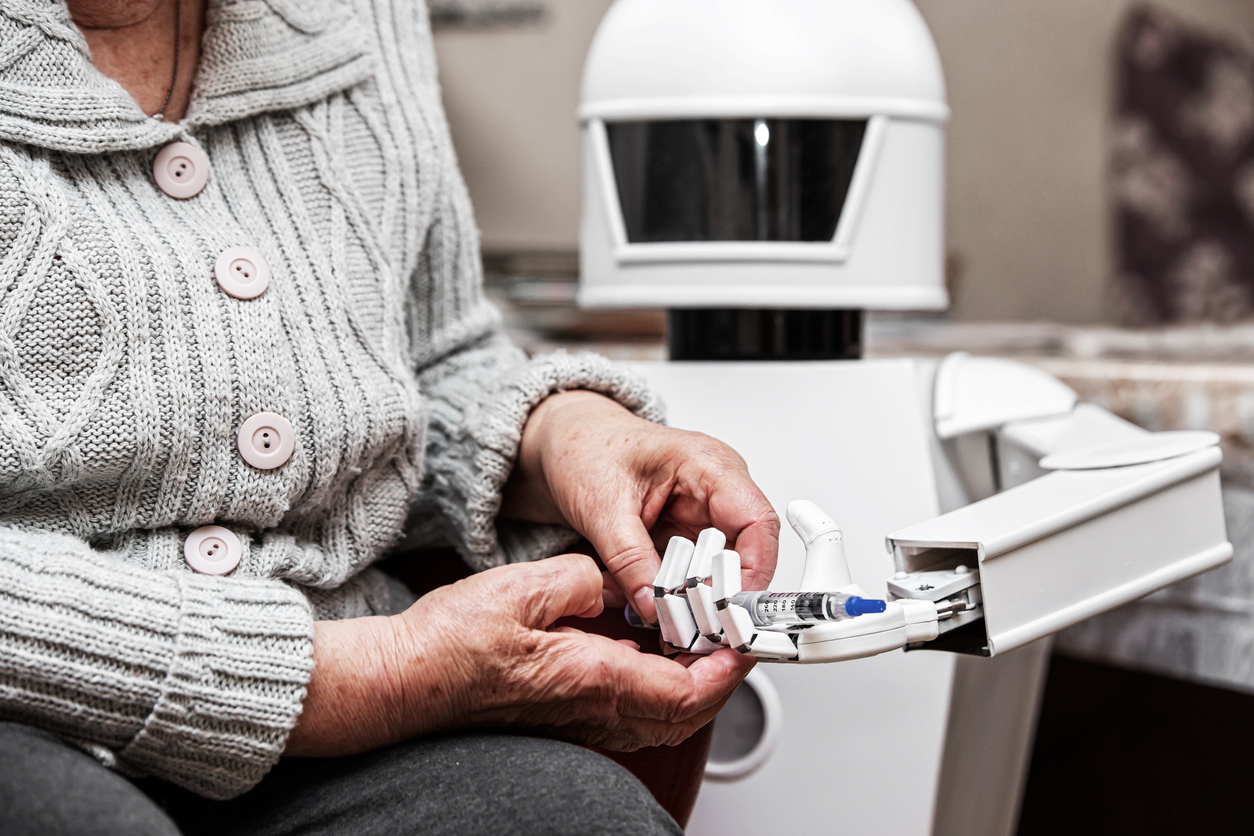
Assistive Robotics: Robots are increasingly used to handle routine tasks such as delivering supplies, transporting lab samples, and disinfecting spaces. By taking on these responsibilities, robotics helps reduce workloads and enables nurses to focus more on direct patient care.
-
Wearable Technology and Remote Monitoring: Devices like smartwatches allow patients to track vital signs such as heart rate and blood pressure. This data can be shared with health care providers, enabling continuous monitoring and more personalized care plans.
-
Smart Beds: Equipped with sensors, smart beds can track patient movement and vital signs and alert nurses to potential issues in real time. This technology helps improve response times and enhances patient safety.
Together, these technologies support more efficient workflows, reduce strain on health care staff, and contribute to better patient outcomes. As innovation continues, their role in nursing will only expand, shaping the future of health care delivery.
AI and Predictive Analytics: The Next Frontier for Nurse Leaders
AI and predictive analytics are rapidly transforming health care, offering nurse leaders new tools to improve patient outcomes and operational efficiency. These technologies use large datasets to identify patterns, forecast risks, and support more informed decision-making.
AI tools can enhance clinical oversight by flagging early warning signs of complications such as sepsis, readmissions, or patient deterioration. Predictive analytics can also help identify high-risk patients, allowing care teams to intervene sooner and tailor treatment plans more effectively.
AI also supports workforce and resource management. Nurse leaders can use predictive tools to optimize staffing levels, reduce burnout, and ensure that the right resources are available when needed. This can lead to more efficient operations and better care delivery overall.
As health care continues to evolve, AI and predictive analytics represent a powerful opportunity. Nurse leaders who embrace these innovations will be better positioned to drive quality improvement, enhance patient safety, and lead their organizations into the future.
The Role of Nurse Leaders
As advanced as these new forms of technology are, they still need humans to optimize their potential. Nurses need the knowledge and skills to handle the data collected by these innovations, whether it’s inputting information into an EHR or devising care strategies built on data presented by wearable technology or smart beds.
Nurse leaders connect the technology that moves health care forward with the humans needed to make innovation work. This requires that they ensure that staff are using and embracing technology without disrupting care delivery.
Challenges to Innovation Implementation
Nurse leaders may face barriers to implementing innovative technology. Common hurdles include the following:
-
Lack of technology skills
-
Data security concerns
-
Resistance to change
Nurse leaders can work to overcome these barriers by developing staff training programs that include upskilling opportunities for nurses looking to improve their technological skills. They can also create internal policies surrounding the technologies that strengthen patient privacy.
How Nurse Leaders Integrate Innovation
Introducing new nursing technology to staff requires nurse leaders to use their knowledge and skills to help staff adapt to change. This requires using specific tactics throughout the implementation process to make the transition as smooth as possible. These tactics include the following:
-
Collaboration. Nurse leaders should gather feedback from staff throughout the implementation process, taking note of ideas that can improve strategies. This allows staff to feel like they’re participating in the process rather than being directed.
-
Holistic training. Any integration of new technology will incorporate training, but nurse leaders need to ensure that it goes further than simply explaining how to use a new device. It must emphasize the technology’s purpose, its benefits for patient care, and its connection to a facility’s primary patient care goals.
-
Flexibility. Effective nurse leaders evaluate the implementation process, leaving opportunities to adjust elements that aren’t working as planned.
Lead Care Delivery Into the Future
The tools and technology used in nursing can advance care delivery in profound ways. They can also provide nurse leaders with opportunities to improve patient care and outcomes. However, nurse leaders must use their knowledge and skills to integrate these technologies in ways that recognize the challenges of introducing change.
The University of Tulsa’s online Master of Science in Nursing (MSN) program can help you develop this crucial awareness. Our program has a Leadership and Innovation Track designed to help you deepen the hard and soft skills needed for effective nursing leadership in a supportive environment, preparing you to make a difference in an important field.
Learn how TU can help you succeed as a trusted leader in care delivery.
Recommended Readings
Jessika Evans’ Story of Transformation at TU: From BSN to MSN
How to Become a Chief Nursing Officer
Sources:
Advances in Internet of Things, “IoT Based Nurse Activities Monitoring and Controlling System”
Aktiia, Beyond the Cuff: The History & Future of Blood Pressure Monitoring
American Association of Colleges of Nursing, Nursing Shortage Fact Sheet
American Registry of Radiologic Technologists, A Timeline of Our Profession
Elinext, “Nursing Software and Hardware Trends to Watch in 2023”
LinkedIn, “Overcoming Barriers: The Challenge of Using Technology Among Nurses”
The Medical Futurist, “From Surgeries to Keeping Company: The Place of Robots in Healthcare”